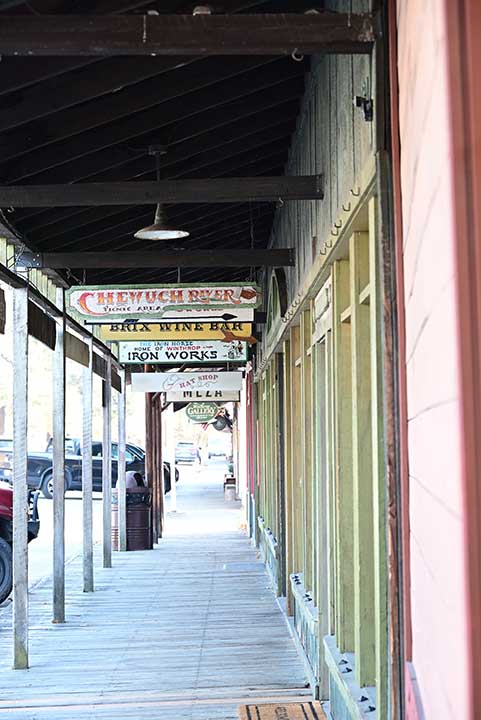
The late opening of the North Cascades Highway got the valley’s tourism season off to a slower than usual start.
Local businesses still feel impact of year’s slow start
“Larch Madness” puts pressure on the fragile hiking trails, snarls traffic, and creates safety hazards on the North Cascades Highway, but the fall influx has helped tourism-dependent businesses in the Methow Valley recover from a bleak year.
So many people were hiking at Maple Pass, Blue Lake and Cutthroat this fall that it was “absolutely crazy” at the Mazama Store on weekends, and really busy during the week as well, Mazama Store co-owner/manager Marielle LeDuc said.
“Yes, the larch marchers have been flooding the town and it’s been really busy! It’s been a wonderful second season and we are very grateful for the revenue,” Winthrop Chamber of Commerce Executive Director Autumn Jateff said by email.
For businesses relying on tourism, 2026 has been difficult, starting with lackluster snow that cut the Nordic ski season short. The traditional spring boost from the opening of the North Cascades Highway was delayed by major road repairs that kept the highway closed until June 14, almost two months later than last year.
With a surge in visitors and pent-up demand in June and July, business at hotels, restaurants and retail outlets was on the upswing — until smoke from wildfires cast a literal pall on the economy by August. Once the fires started, people kept coming for a week or so, but then visits dropped off and people stayed away well into September, LeDuc said.
Most businesses in Winthrop had the same experience, starting with the slump in winter that lagged through the late pass opening, said Lindsay Evans, owner of East 20 Pizza and a board member and treasurer for the Winthrop Chamber of Commerce.
In Winthrop, retail sales as of the end of July (the latest numbers available) were 88% of what the town had budgeted, compared with 98% last year and 117% in 2022, according to data from the town. Lodging taxes were 92% of the budgeted amount.
Although East 20 Pizza has a dedicated local following, they rely on tourist traffic to be financially healthy. While they were affected by the slow winter and late pass opening, it was the smoke that had the biggest impact, Evans said.
Like most local businesses, East 20 was hoping for a strong fall to recoup earlier losses. But despite great sales — 7% or 8% above last October with a few days left in the month — that spike won’t make up for the poor year overall, Evans said.
But at the Mazama Store, sales in September and October were strong enough that it put them on par with last year, LeDuc said.
Because many of the valley’s attractions are weather-dependent, it’s obviously impossible to have guarantees, but winter tourism has become more reliable than summer, Evans said. The traditional shoulder seasons — in the fall, between hunting season and the snow, and in March and April — have been shrinking as more people visit during those months, LeDuc said.
Delicate balance
Business owners in the valley — particularly those in the food sector who deal with perishable inventory — have to balance multiple variables. When it’s busy, they need enough employees to manage the crowds and keep patrons happy. And restaurants have to anticipate the right amount of food so they don’t run out — or have things go bad, said Jacob Young, general manager of the Old Schoolhouse Brewery’s (OSB’s) three locations in Winthrop, Twisp and Mazama.
This summer, Young made the decision to close the Mazama Public House one day a week to avoid overworking the staff or running out of food — and risking dissatisfied customers who would post negative reviews online, he said. Although being closed means lower revenue, it’s worse to be open and run out of food, Young said.
At OSB, sales in Winthrop and Mazama are down about 10% to 12% for the year, which Young attributes to the late opening of the pass and wildfire smoke. In fact, every month, with the exception of July and September, was down significantly this year. The taproom in Twisp draws primarily local patrons and has been relatively unaffected, he said.
Then again, some of the drop in revenue could also be traced to broader anxieties about inflation and high fuel prices. OSB’s wholesale sales, all in Washington state, have been down by about 10% this year, Young said.
Even though sales may rebound when the weather is good, Evans and other business owners have started to worry about lasting impacts on people’s vacation experience in the valley. Do people think of Winthrop as a dependable place for a fun trip — do they want to come back? What are they telling their friends? she said.
Empty rooms
For hotels and cabin rentals, the picture has been more complicated. Like most tourist businesses, the Hotel Rio Vista in Winthrop saw a drop in bookings because of the late pass opening and the smoke, owner Paul Peterson said. Unfortunately, the busy fall hasn’t made up for the deficit during the rest of the year, he said. As president of the Winthrop Chamber of Commerce, Peterson has heard similar reports from many businesses.
Tourist stays have been down, but fires in the area and construction of fiber-optic lines for MethowNet have kept dozens of firefighters and construction crews based in the valley for months. That has helped, particularly at places that offer extended rentals. However at the Hotel Rio Vista, business from fire crews didn’t really change the bottom line because government per diem rates are well below the hotel’s regular rates and barely cover its costs, Peterson said.
For its fiber-optic project, Methownet has had between four and 12 crews, with two to four workers per crew, staying in the valley since April. Costs are funded 90% by the federal grant for the project, Okanogan County Electric Co-operative General Manager Greg Mendonca said. Methownet is a subsidiary of the electric co-op.
Smoke — a fact of life
Unfortunately, smoke has become a common-enough scourge that businesses plan for it. By mid-July, the Mazama Store is careful about what they order in case business drops off. “We’re prepared — we always think about August, because we can’t count on it. It’s an unknown month,” LeDuc said.
The drop in business in August actually works out for some businesses that hire college students for the busy summer season, since students generally head back to school by the end of August, LeDuc said.
While businesses welcome the super-busy fall, they take different approaches to make it work. At the Mazama Store, they have to manage the crush to ensure that tourists have a positive experience and that employees aren’t overwhelmed. The store shortened Sunday hours this fall so they could get by with just one shift for workers, LeDuc said.
At East 20 Pizza, Evans is committed to maintaining consistency and staying open seven days a week. That meant she and other workers worked extra-long days, often without a day off.


