
Last November, I wrote about the adventures of Jessica Kelley on an arduous biking and rafting trip in Canada. This summer, I met up with her again at Lynne Wasson’s puppy class, where we both had our young dogs learning the basics of becoming canine good citizens. There, Jessica told me about her summer occupation as a range rider.
Wolves were extirpated from most of the contiguous U.S. by the 1930s. With wolves eliminated from the landscape, elk and deer populations exploded, and their foraging caused riparian and upland plant communities to collapse, according to an article by Lucy Sherriff in High Country News. In 1973, with the passage of the Endangered Species Act, the U.S. Fish and Wildlife Service listed wolves as endangered, which protected them in all of the lower 48 states.
Sherriff noted, “To some environmentalists, wolves are emblematic of a healing wilderness. To other conservative ranchers, they symbolize bureaucratic meddling in a rural way of life that treasures self-reliance and a staunchly proud independence — even if these same opponents frequently lean heavily on the use of public lands, with their low grazing fees, for their livelihood.”
In 2008, the Washington State Department of Fish and Wildlife (WDFW) determined that wolves had returned to Okanogan County, specifically, Lookout Mountain in the Methow Valley. To mitigate conflict, WDFW spoke with various discussion groups and published the Wolf Conservation and Management Plan in 2011. The plan recommended training ranchers in the use of non-lethal deterrents. Wolves were collared so that their movements could be monitored.
Ranchers were advised to move cattle away from known wolf activity, remove carcasses quickly, use deterrents such as guardian dogs, electric fencing, and flagging, and utilize range riders. If all else failed, the plan recommended killing wolves.
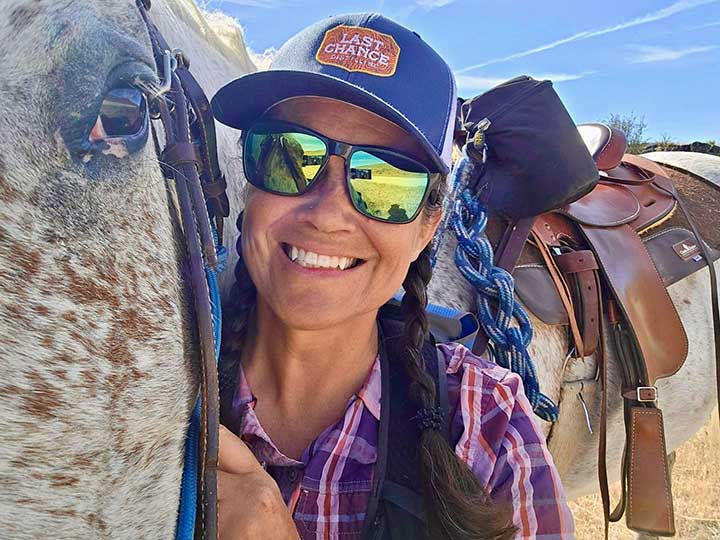
WDFW employs Jessica as a range rider. She learned about range riding after spending seven years as a member of the Wolf Advisory Group. A biologist by training, the job appealed to her because she grew up in Wisconsin around horses and livestock, spent long hours by herself outdoors, and had extensive experience in the Washington backcountry.
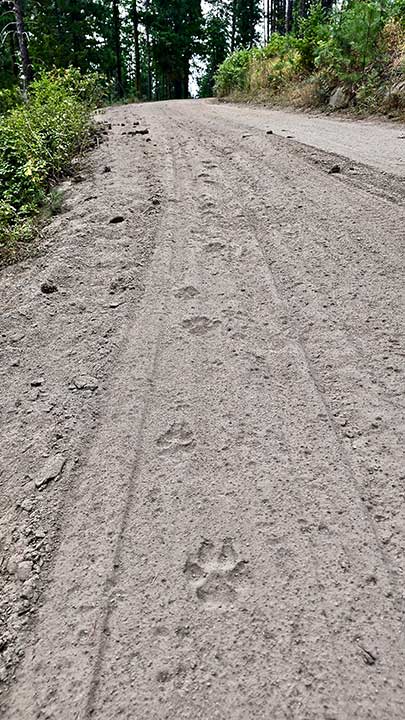
When asked about her duties, she said, “Overall, my goal is to reduce conflict between livestock and wolves. I do this by patrolling pastures and grazing allotments, establishing a human presence, checking the health and stress levels of the cattle, and scouting for signs of carnivores. Depending on the size and location of the pasture and my goals for the day, I will travel by horseback, foot, bike, or vehicle. I frequently camp overnight with the cows to provide a human presence at a time when other people are typically not around, but when wolves are still active. If I notice any issues with the cattle, I report them to the rancher. With a rancher’s permission, I will sometimes move cattle to a safer area or reunite stragglers with the herd.”
Jessica said her encounters with wolves were few, brief, and primarily at night. When she does see them, she uses bright lights and loud noises to get them out of the area. She’s seen a few wolf depredations on the rangelands she patrols, but said, “Could there have been even more depredations if I hadn’t been patrolling? Possibly. It’s hard to say for sure, since there are so many variables. In general, wolves prefer to hang out in areas that humans don’t frequent, so if I can establish a human presence amongst a herd, the wolves likely go elsewhere.”
Jessica plans to remain a range rider as long as possible and sees a need for more range riders. But, she said, funding is a problem.


