
Smoke lingers from two ongoing fires over by Wenatchee, but the heat of summer is gone, and the cool days of fall have arrived. Most of the garden has been harvested, so it’s time to not only dry, can, freeze, and ferment, but also plant garlic and clean up all the plant debris, putting the garden to bed for the winter.
The latest Potluck With a Purpose at the Twisp Valley Grange featured Michelle Mondot and Maeyowa Yockey, who have been growing, harvesting, and preserving food for their families for over 30 years. In a presentation entitled “Putting Up the Harvest,” They shared helpful advice on the many ways to preserve the harvest safely, along with time- and money-saving tips from their years of experience and experimenting.

Garlic does well in our climate. Since two pioneering individuals, former hippies in the Aeneas Valley, started Filaree Farm, garlic has been an important and profitable crop in the Okanogan Valley. Filaree Farm, a WSDA and USDA certified organic farm, still exists and has an extensive offering of seed garlic such as porcelain, rocambole, turban, artichoke, Asiatic, purple stripe, silverskin, creole, Russian red, and the oldest garlic strain in the U.S. that originated on the Colville Reservation, Inchelium.
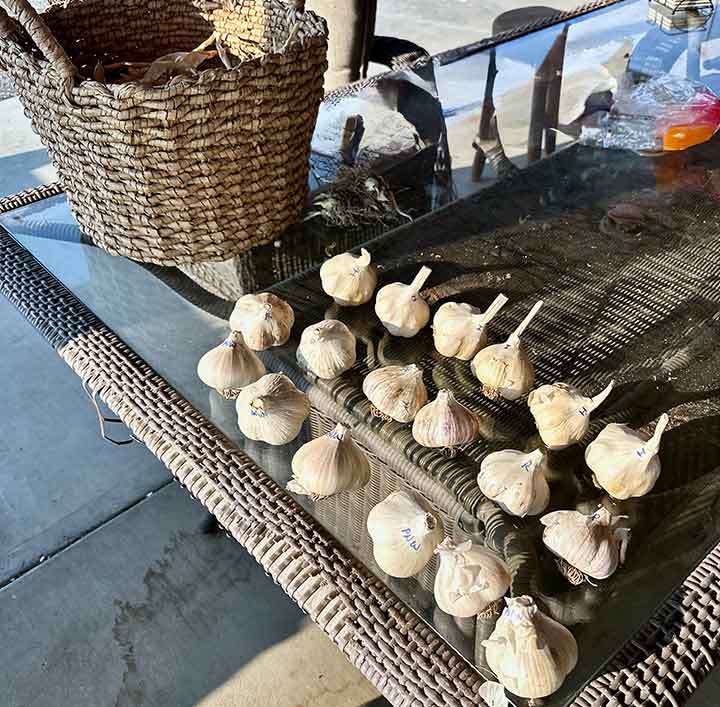
My favorite garlic is Inchelium, but this year I supplemented with seed garlic from a friend who has been growing garlic on the west side, carefully keeping track of the various strains originally purchased from Filaree Farm over 20 years ago. In a text after shipping the garlic, she said, “I think it will appreciate being planted back in its home stomping grounds. Garlic is definitely an Eastside crop, and always tastes better when grown in the blazing sun.”
To put the garden to bed, all the drip irrigation must be removed, and the crop residue pulled up and either composted or piled up to be burned later on. The Recycling Center offers free disposal of garden debris at least twice a year. On subscription, they will also take food/vegetable waste that is turned into compost by Kate Wynn of B2G Composting. With this subscription, you get lovely compost back from Kate.
Another rite of fall is bringing the cattle home from their summer pastures on allotments on federal and state land. In the past, I’ve participated in a few of the roundups on my mare, who was less than enthusiastic about bovines. This year, cattle strolled and pooped down the East County Road, blocking traffic long enough that I was late for yoga. But I didn’t mind. Living somewhere where cattle have the right of way on our country roads is, as my daughter would say — totally awesome.
On an unrelated topic in a column about fall chores, except that it has something to do with gardening, the Master Gardener Coordinator for Okanogan County just informed me and other Okanogan County Master Gardeners that the county commissioners have decided to discontinue the Master Gardener Program. The Master Gardener program thrives in many other counties in Washington state, but not so much in Okanogan County. Our many plant clinics weren’t well utilized, and calls to the Extension Office for help with gardening issues were few. Still, I found the education provided by WSU valuable, and I enjoyed my time spent in the program because I believe in its mission. The WSU County Extension Service’s focus in Okanogan County will now be geared towards supporting 4-H.


